
Arla kefir review
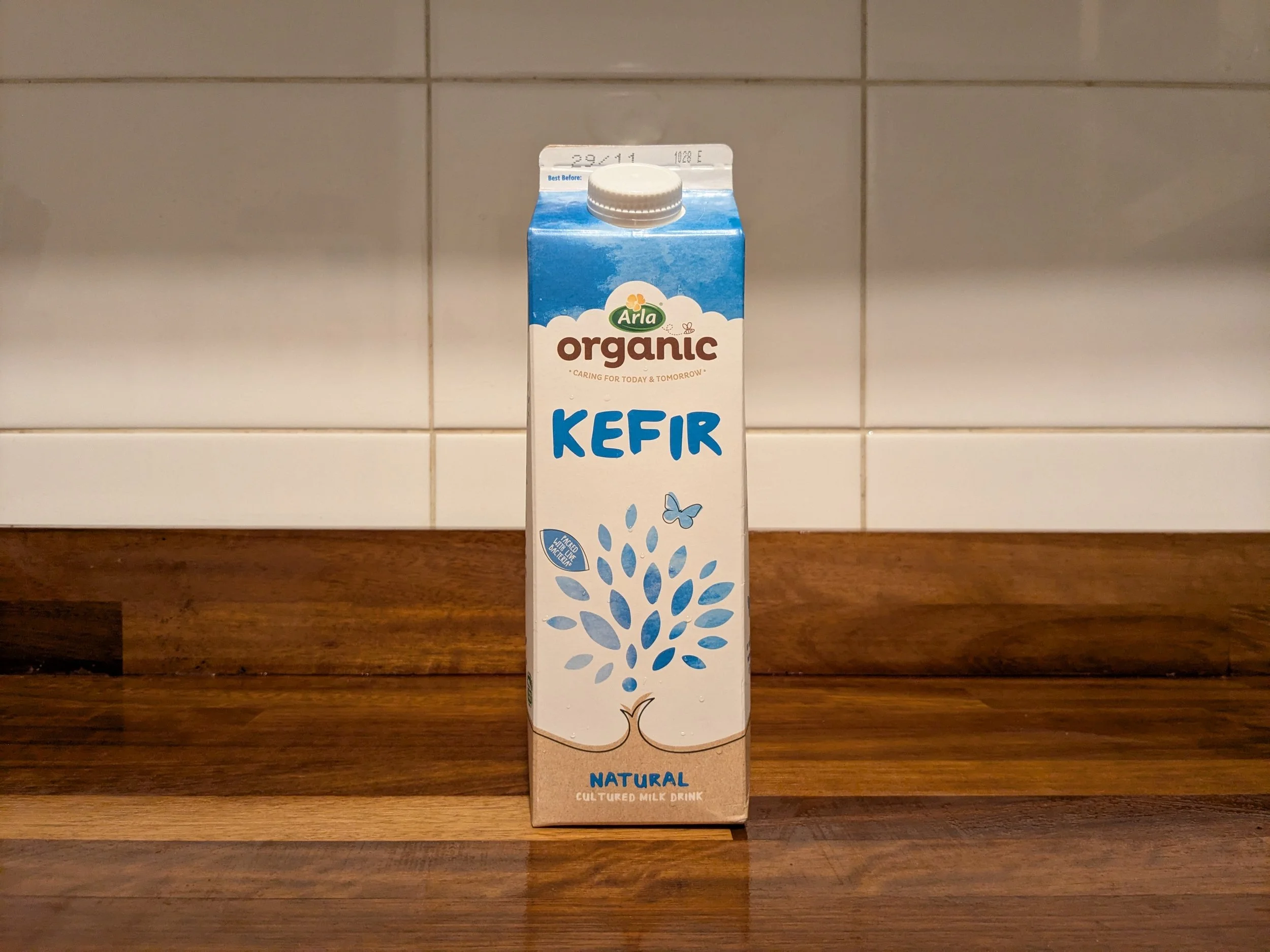
Here we will give a hands-on, taste-tested review of Arla kefir. We’ll look into the benefits, ingredients, nutrition, use and taste of this organic kefir. We’ll also compare some health factors against other popular kefir.
This kefir is available in Waitrose supermarkets in the UK.
You might also be interested in reading our article on the best probiotics in the UK if you want to add more healthy microbes to your diet.
About kefir
When most people think of kefir, they’re referring to dairy kefir – a fermented milk drink traditionally made by adding kefir grains (clusters of bacteria and yeast living in natural symbiosis) to milk. The result is a tangy, drinkable dairy product similar to yoghurt but thinner in texture.
Because it’s fermented with a diverse community of microbes, dairy kefir has a distinctive flavour and texture that set it apart from yoghurt. It can be enjoyed on its own or added to cereal, smoothies or dressings. The fermentation process also breaks down much of the milk sugar, giving it a slightly lower lactose content than milk.
There’s also water kefir, made by fermenting a sugar-water solution with water kefir grains – a related but distinct culture from dairy grains. Water kefir is a sparkling, dairy-free drink often flavoured with fruit or herbs. Although it contains different species of bacteria and yeasts, it follows the same natural fermentation process as dairy kefir.
However, many commercial kefirs – both dairy and water – are not made with traditional grains. Instead, they’re produced by inoculating the liquid with a selected mix of bacterial and yeast strains. This simpler method creates a controlled, consistent product and is easier for manufacturers to scale, but it lacks some of the microbial diversity and complexity of true grain-fermented kefir.
Traditional kefir grains contain a shifting community of bacteria and yeasts, so the exact number and combination of strains vary from batch to batch and can’t be stated precisely on a label.
As a general rule, if a kefir is traditionally made it will mention ‘kefir grains’ on the label. And if a kefir states a precise number of strains, this suggests it has been inoculated with a defined starter blend rather than fermented with grains.
So it’s worth paying attention to how your kefir is made - and we’ll explore how this particular kefir is made in this review.
Read more about the benefits of kefir and how it differs to yoghurt.
Ingredients of Arla kefir
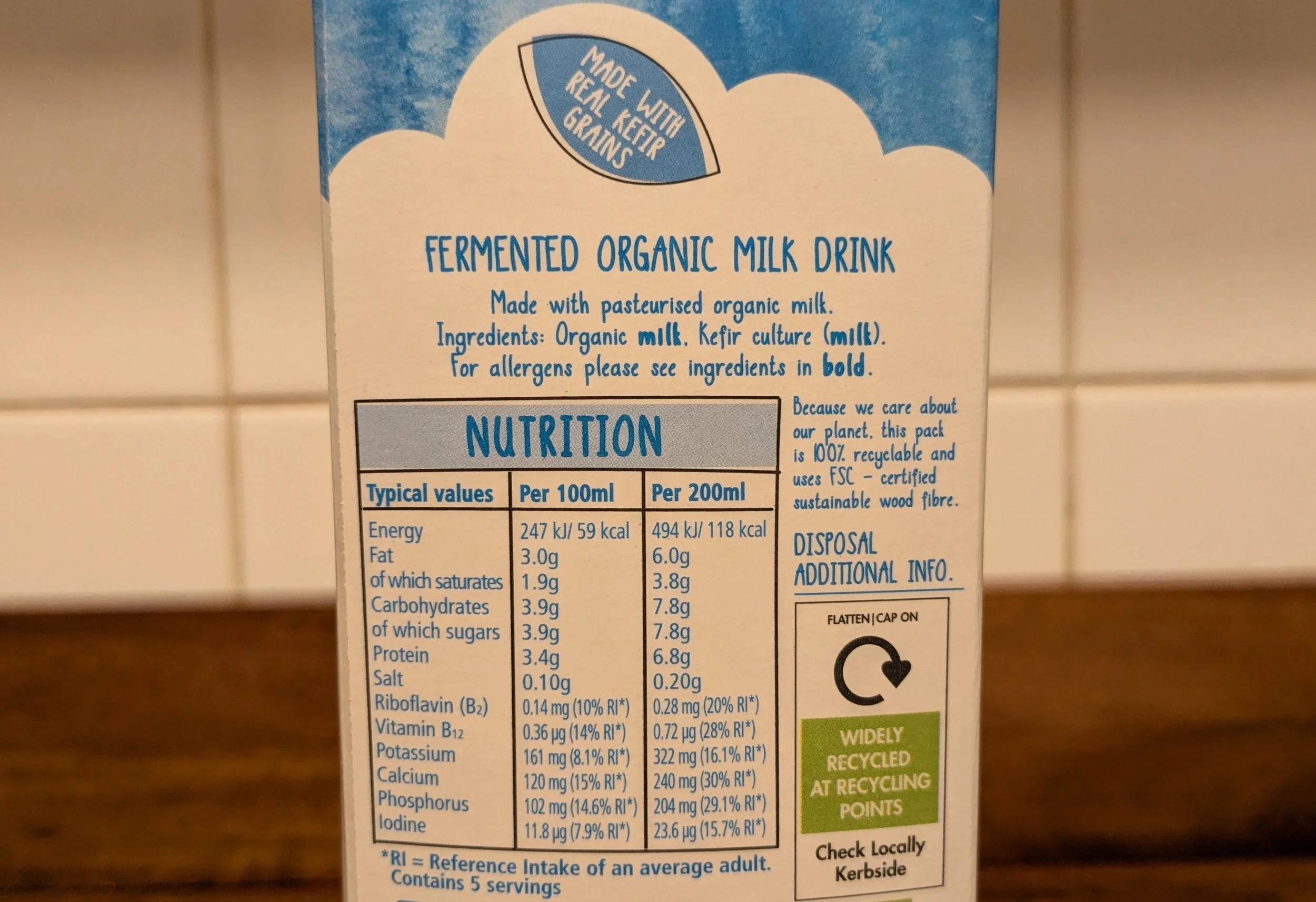
This is an organic kefir which only includes milk and kefir cultures.
It’s good to see this kefir is made authentically with real kefir grains, rather than being inoculated with some cultures.
Full marks so far!
Our favourite gut health products in the UK
YourBiology Gut+ probiotic not only offers 10 strains of probiotics, but also includes two types of prebiotics, three digestive enzymes and vitamin D for gut health support. All this means it offers a lot more benefits for gut health and general health than most probiotic supplements do
Healthpath gut health test is the UK’s most comprehensive gut health test. It tests over 100 biomarkers, checks your digestion and immune response, analyses leaky gut and provides a clear and understandable report on your microbiome
YourBiology SuperGreens+ is a superfood and greens supplement which makes it very easy to get a huge amount of nutrition - vitamins, minerals, amino acids, fibre, polyphenols and more - in one glass. Great for supporting gut health, skin health, energy, mental clarity and immunity.
Read more about the best gut health products in the UK.
Benefits of Arla kefir
For context, we’ll compare a few key factors against Yeo Valley kefir which is a popular kefir in the UK.
Live cultures
As mentioned, this kefir is made with kefir grains so it should have a broad community of live cultures in it. The label states it includes multiple cultures such as Lactobacillus acidophilus, Lactobacillus kefirgranum, Lactococcus lactis, Streptococcus thermophilus and Kluyveromyces marxianus. This is likely not an exhaustive list of the cultures it contains.
In comparison, Yeo Valley kefir contains 14 strains of live cultures - which suggests it has been inoculated with a controlled starter blend of cultures (and not made with kefir grains).
In terms of the actual amount of live cultures present (ie colony forming units), both brands don’t give any specific information on this.
Other health measures
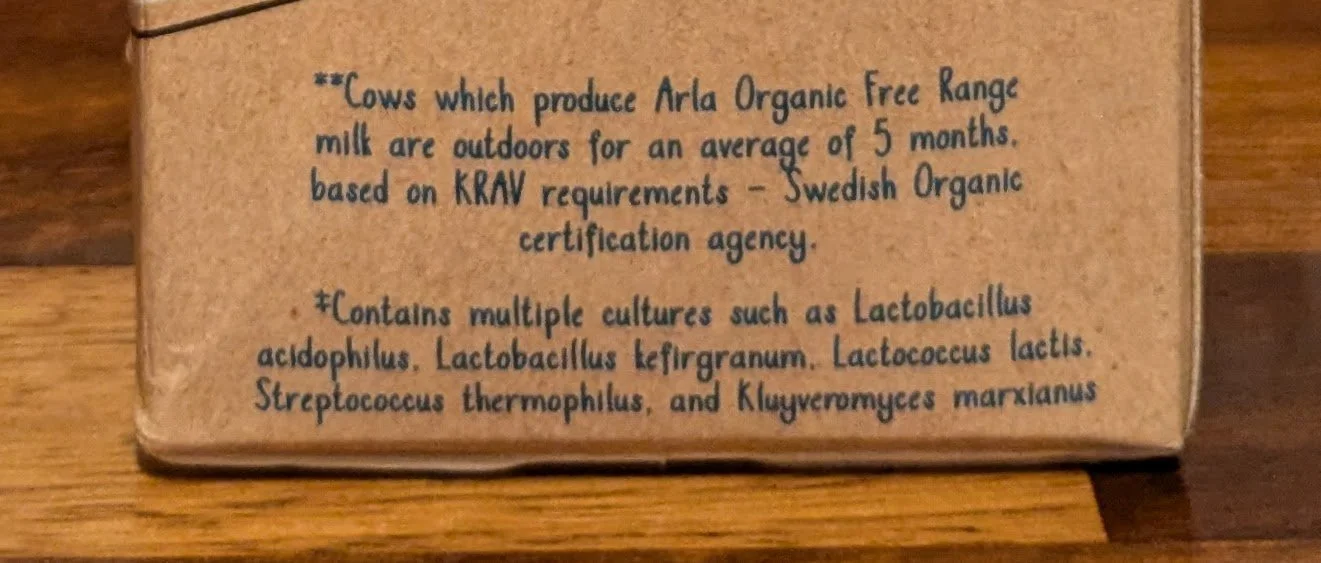
Arla kefir has some strengths and weakness when compared to Yeo Valley kefir in terms of key health measures.
Protein: This kefir has moderate protein levels at 3.4%. Yeo Valley is higher at 4%.
Sugar: Its sugar content is moderate at 3.9%, which is below Yeo Valley’s level of 5.7%.
Fat: It also has moderate levels of fat at 3%, which is above that of Yeo Valley (1.9%).
Calcium: And it has moderate levels of calcium with 120mg per 100ml, which is slightly below Yeo Valley’s level of 126mg per 100ml.

Appearance
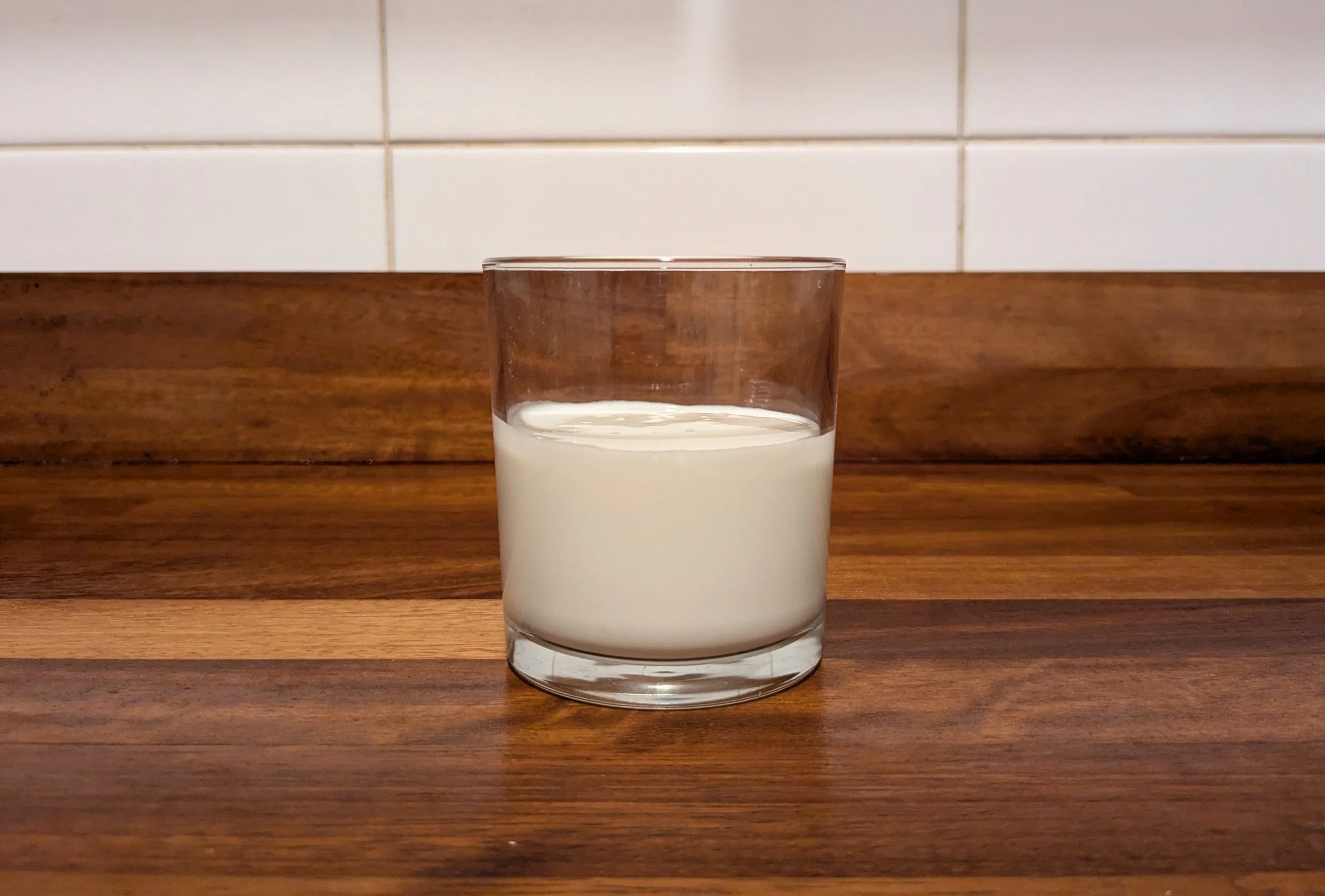
As the picture below shows, it has a standard milky appearance with some small bubbles on the surface.
Texture
The texture is nice and thick without lumps. There’s also a fine effervescence.
Flavour
The aroma is like a yoghurt with some farmhouse and funky cheese character. This is a sign that it’s gone through a proper kefir grain fermentation.
Compared to the aroma, the taste is quite neutral and not as funky as I had expected. It’s quite a clean, fresh taste with some cream and savoury cheese characteristics. And the acidity is moderate.
Overall, the flavour is very good and strikes a good balance between traditional kefir flavour (ie funky and complex) and approachability.
Use
This kefir would be very versatile. It could be had on its own or added to cereal or smoothies.
And it would work well in dressings or marinades.
Cost of Arla kefir
We bought a 1L bottle from Waitrose for £2.95 - which is great value on a per ml basis.
Summary
Rating: 4.75 stars out of 5.
Verdict: Arla kefir is organic and is traditionally made with kefir grains. It has an approachable taste while maintaining some of the complex characteristics of traditional kefir. It also presents great value.
Pros
organic
simple ingredients
authentically made with kefir grains
great flavour
thick texture with fine effervescence
great value
good diversity of live cultures
Cons
no information on the actual number of live cultures present (ie colony forming unit count)
Now read about the best kefirs in the UK!
Other benefits of kefir
Vitamins and minerals
Kefir is a source of various vitamins and minerals including:
calcium
B vitamins (B12 and riboflavin)
magnesium
potassium
phosphorous
These vitamins collectively support bone health, energy production, muscle function, immune function and cardiovascular health.
Live cultures
Live cultures in kefir may help support digestion by aiding lactose breakdown and contributing to a balanced gut microbiome. Evidence varies by strain, so any benefits depend on which specific bacteria or yeasts are present.
Postbiotics
Postbiotics are beneficial compounds produced during fermentation and may help support gut health by maintaining a healthy gut environment. Their effects can differ between products, and research is ongoing into how these compounds contribute to digestive wellbeing.
Reduced lactose
Because of the strong fermentation of milk sugars by a diverse range of bacteria and yeasts, kefir is better for people with some degree of lactose intolerance compared to milk or yoghurt.
Our favourite gut health products in the UK
YourBiology Gut+ probiotic not only offers 10 strains of probiotics, but also includes two types of prebiotics, three digestive enzymes and vitamin D for gut health support. All this means it offers a lot more benefits for gut health and general health than most probiotic supplements do
Healthpath gut health test is the UK’s most comprehensive gut health test. It tests over 100 biomarkers, checks your digestion and immune response, analyses leaky gut and provides a clear and understandable report on your microbiome
YourBiology SuperGreens+ is a superfood and greens supplement which makes it very easy to get a huge amount of nutrition - vitamins, minerals, amino acids, fibre, polyphenols and more - in one glass. Great for supporting gut health, skin health, energy, mental clarity and immunity.
Read more about the best gut health products in the UK.
Your reviewer
This review was written by Travis, founder of Hello Gut Health.
A long-time gut health writer and advocate with over ten years of experience exploring the science of the microbiome and fermentation.
He combines careful research with practical testing to help readers make informed, trustworthy choices.
He has reviewed over 150 gut health products.

Related articles


