
Arla skyr yoghurt review
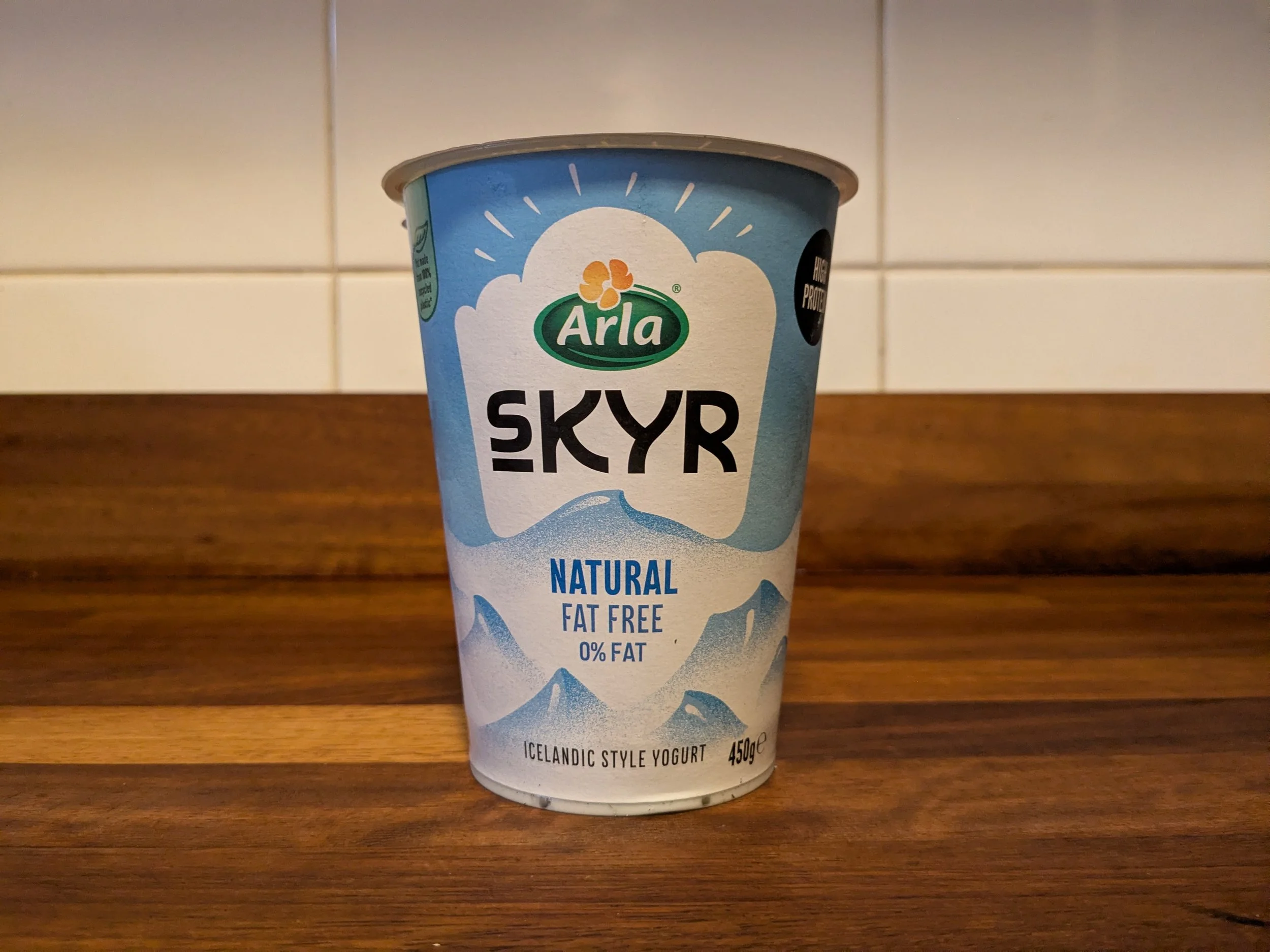
Here we will give a hands-on, taste-tested review of Arla skyr yoghurt. We’ll look into the benefits, ingredients, nutrition, use and flavour of this high protein yoghurt. And we’ll compare a few factors against similar yoghurt.
This yoghurt is available in some supermarkets in the UK.
You might also be interested in reading our article on the best probiotics in the UK if you want to add more healthy microbes to your diet.
What is skyr?
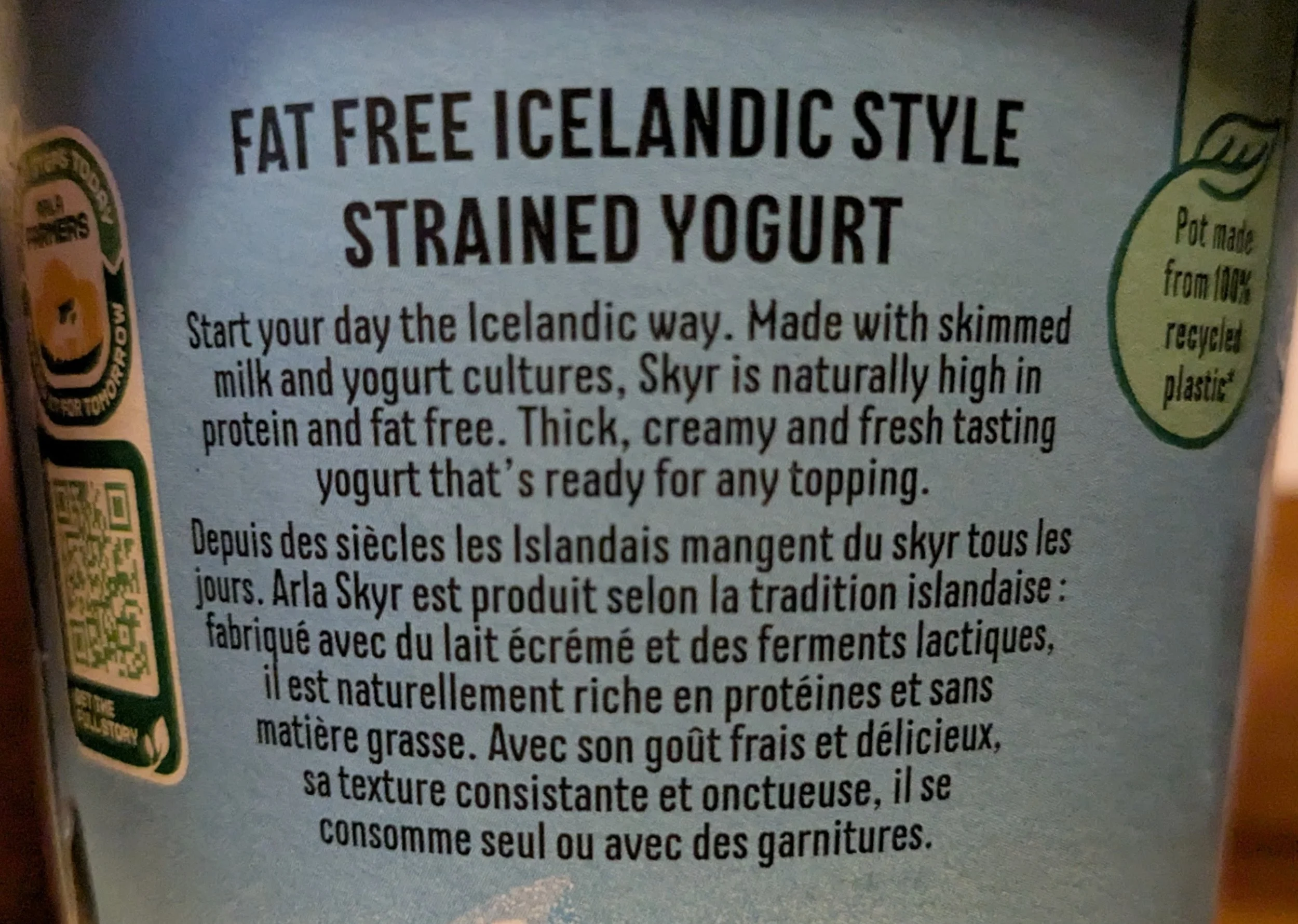
Skyr is traditionally made by adding both bacterial cultures and a small amount of rennet to curdle the milk before straining off the whey. This curdling step makes traditional skyr technically a type of fresh cheese rather than a strained yogurt.
However, most modern commercial skyr skip the curdling step and make skyr just like a strained Greek yoghurt. And this product is actually labelled as a ‘yoghurt’ which means it can’t contain rennet.
Ingredients of Arla skyr yoghurt
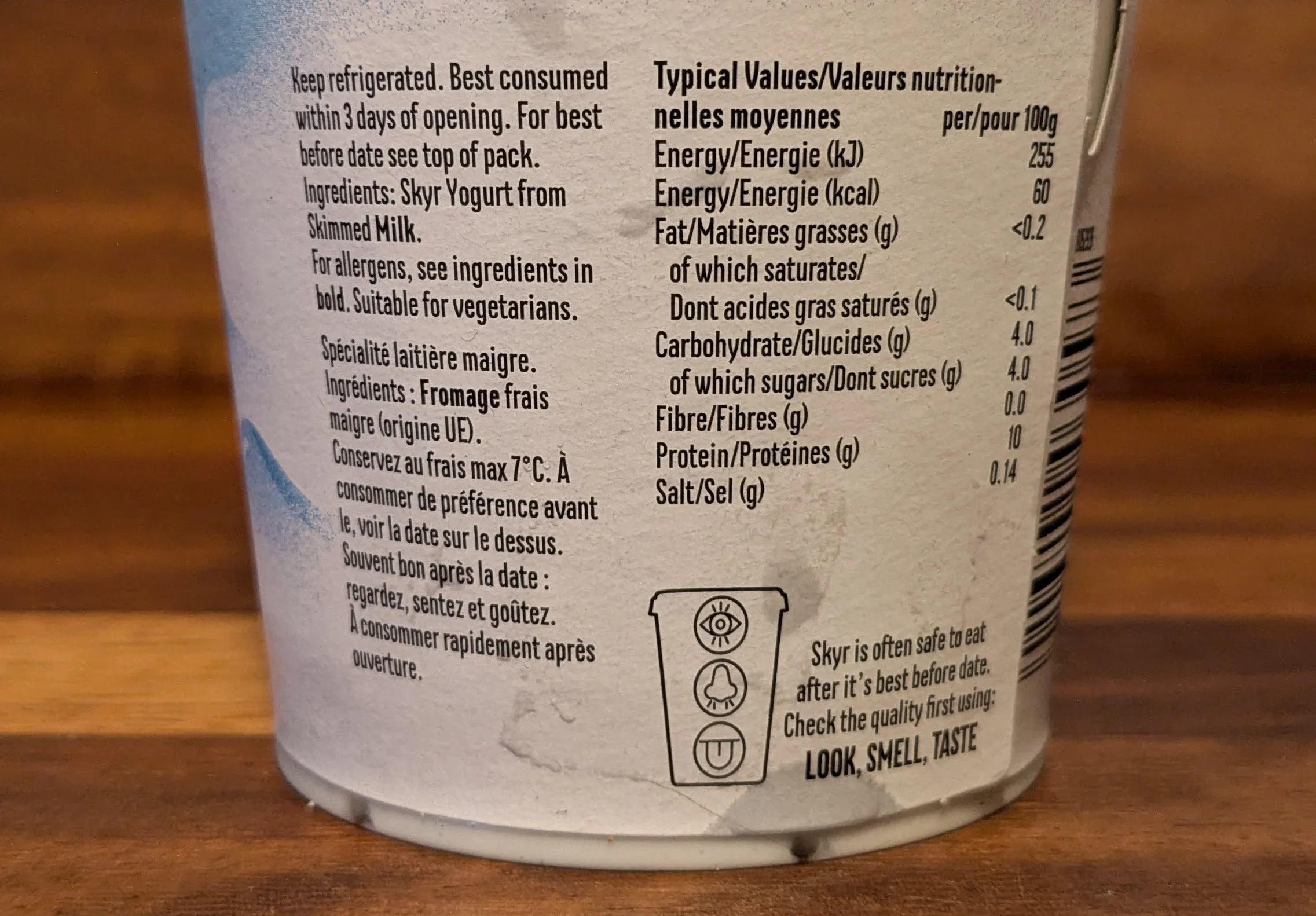
This is simple, natural yogurt which only contains skimmed milk and yoghurt cultures.
Our favourite gut health products in the UK
YourBiology Gut+ probiotic not only offers 10 strains of probiotics, but also includes two types of prebiotics, three digestive enzymes and vitamin D for gut health support. All this means it offers a lot more benefits for gut health and general health than most probiotic supplements do
Healthpath gut health test is the UK’s most comprehensive gut health test. It tests over 100 biomarkers, checks your digestion and immune response, analyses leaky gut and provides a clear and understandable report on your microbiome
YourBiology SuperGreens+ is a superfood and greens supplement which makes it very easy to get a huge amount of nutrition - vitamins, minerals, amino acids, fibre, polyphenols and more - in one glass. Great for supporting gut health, skin health, energy, mental clarity and immunity.
Read more about the best gut health products in the UK.
Benefits of Arla skyr yoghurt
This product comes with the usual health benefits of yoghurt as well as a great nutritional profile. For context, we’ll compare a few key factors against Tesco high protein yoghurt - which is a similar product with very high protein and very low fat.
Live cultures
Arla gives no indication on which strains of live cultures are present or the amount of them (ie colony forming units).
Tesco high protein yoghurt also doesn’t provide any of this information.
Postbiotics
Postbiotics are essentially beneficial things cultures produce during fermentation. These include healthy short-chain fatty acids which nourish our gut lining and may help reduce symptoms of irritable bowel syndrome.
Nutrients
This yoghurt has very good health measures, similar to Tesco high protein yoghurt.
Protein: It has very high protein levels at 10% - which is below Tesco at 11.3%
Fat: This yoghurt is extremely low in fat with 0.2% fat - which is under even Tesco’s very low 0.4%. (So it’s not literally ‘fat-free’ as the label states, but food labelling law allows products to claim to be fat free if they are under 0.5% fat.)
Sugar: The sugar content is moderate at 4% - which is similar to Tesco’s at 3.9%.
Calcium: Unfortunately it doesn’t list its calcium content. Tesco has moderate levels of calcium at 120mg per 100g.
Appearance
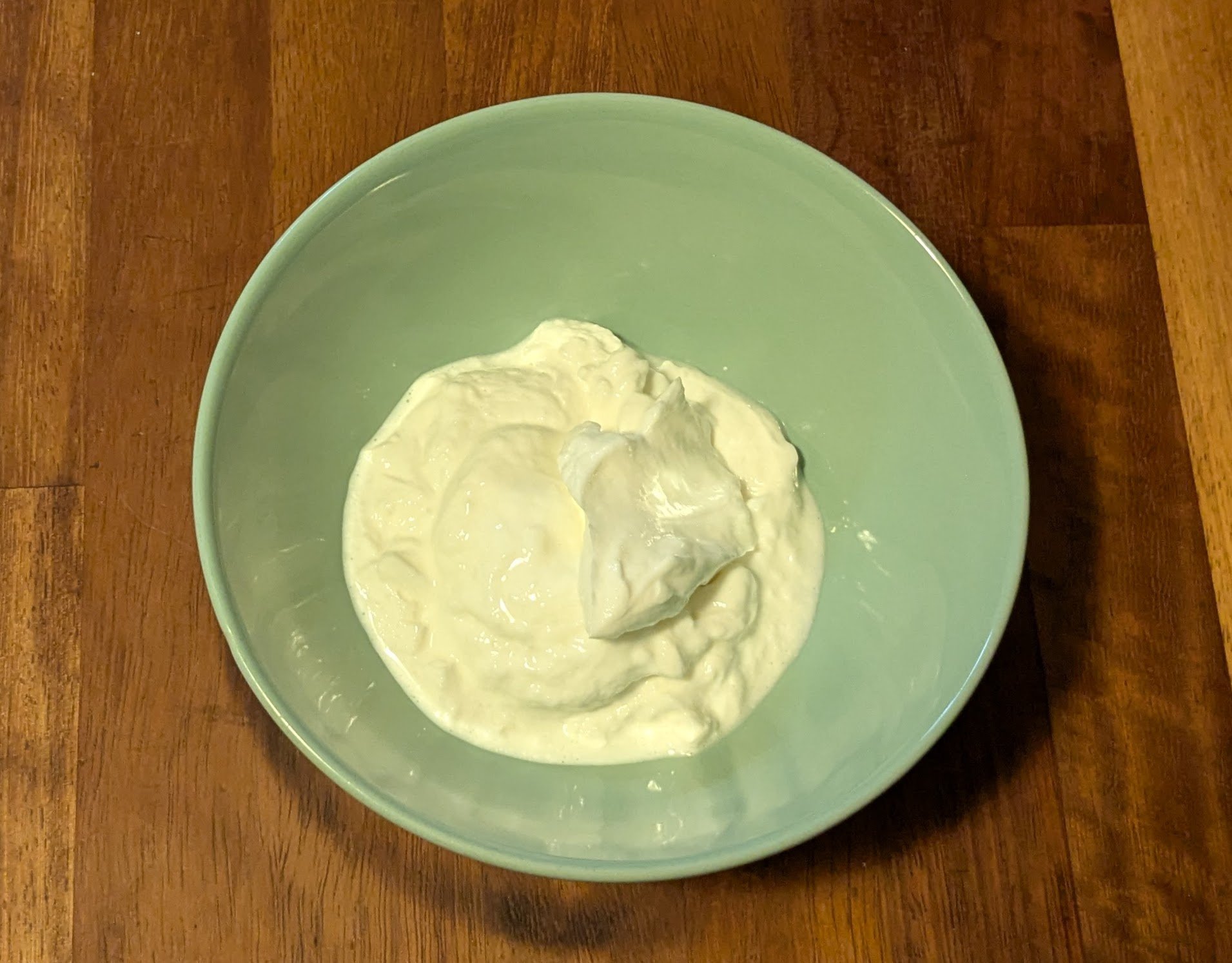
As the picture below shows, it holds a somewhat irregular shape in the bowl without fully sinking to the bottom.
Texture
The texture is very thick and it has a very good level of creaminess for a product with 0.2% fat.
Flavour
The aroma is mostly of savoury cheese.
The taste is quite neutral without the savoury cheese aspects I was expecting. It doesn’t have the dreaded dry chalkiness which these types of yoghurt can have. The acidity is fairly high, but in balance. And the aftertaste is clean and refreshing.
Overall, for a high protein yoghurt with such low fat the taste is excellent and flawless.
Use
Given the good taste, this yoghurt could be had on its own or added to cereal or smoothies.
The near absence of fat may mean it wouldn’t work well in dressings or marinades.
Cost of Arla skyr yoghurt
You can buy a 450g tub from Sainsburys for £2.50.
Review summary
Rating: 4.75 stars out of 5.
Verdict: Arla skyr yoghurt is very high in protein and very low in fat. And it has a great taste for a very high protein yoghurt.
Pros
simple, natural ingredients
thick texture
good creaminess considering the fat levels
very high protein levels
very low fat levels
flawless taste
Cons
no information on the strains of live cultures included
no information on the actual amount of live cultures it contains (ie colony forming units)
no information on its calcium content
more expensive than some competitors
Now read our article about the best yoghurt in the UK!
Health benefits of yoghurt
Aside from the specific benefits listed above, especially related to probiotics and postbiotics, yoghurt has some other important health benefits.
Vitamins and minerals
Yoghurt is a source of various vitamins and minerals including:
calcium - which helps digestion and supports bone and teeth health
magnesium - which supports bone health, muscle function and energy production
phosphorus - which is important for bone and teeth health and energy metabolism
potassium - which supports heart, muscle, nerve and kidney health
vitamins B2 and B12 - which support immunity, energy production and cell and nerve function
vitamin A - supports vision, immune function, cell growth and healthy skin
Satiety and weight management
The high protein and low carbohydrate content in yogurt, especially Greek style yogurt, helps you feel fuller for longer which can help control your appetite. Greek yoghurt is often recommended by dietitians for this reason.
Reduced lactose
Compared to unfermented dairy products such as milk, yoghurt has lower levels of lactose as this is partially consumed by bacteria during the fermentation process. This makes it more digestible for people who have some degree of lactose intolerance.
Factors we consider in our ratings
The factors we consider when doing a review (and the weightings of each of these) may vary depending on the product we are testing, but here are the key general factors we consider when we settle on a rating for a product.
Health benefits
We find out how the product will be good for your health and outline the benefits for you in simple language. This often involves doing research so you don’t have to. We often link to scientific studies or articles summarising scientific findings so you can dig deeper if you want to.
Things detrimental to health
We want to highlight where a product might include something bad for your health - even if the product might be good for you in another way. This could include such things as pointing out certain additives it contains or high sugar levels.
How it’s made
This will vary depending on the product, but we want to see a quality process for making it and quality ingredients. For example, we want to see a kombucha traditionally fermented with lots of different microbial strains and we want to see a yoghurt made with fresh milk and not milk powders.
Price
While we expect quality products to be more expensive, they still have to be priced within reason. On the other side of things, a product which is priced very competitively will get a ratings boost based on the value it provides.
Flavour
For some products flavour won’t be a factor (eg probiotic tablets), but for others, like yoghurt or kimchi, flavour is a key aspect because these products are made to be enjoyed as well as being healthy! We will try to be as subjective as possible and describe the flavour in detail so you can get an idea of whether you would like it or not.
Our favourite gut health products in the UK
YourBiology Gut+ probiotic not only offers 10 strains of probiotics, but also includes two types of prebiotics, three digestive enzymes and vitamin D for gut health support. All this means it offers a lot more benefits for gut health and general health than most probiotic supplements do
Healthpath gut health test is the UK’s most comprehensive gut health test. It tests over 100 biomarkers, checks your digestion and immune response, analyses leaky gut and provides a clear and understandable report on your microbiome
YourBiology SuperGreens+ is a superfood and greens supplement which makes it very easy to get a huge amount of nutrition - vitamins, minerals, amino acids, fibre, polyphenols and more - in one glass. Great for supporting gut health, skin health, energy, mental clarity and immunity.
Read more about the best gut health products in the UK.
Your reviewer
This review was written by Travis, founder of Hello Gut Health.
A long-time gut health writer and advocate with over ten years of experience exploring the science of the microbiome and fermentation.
He combines careful research with practical testing to help readers make informed, trustworthy choices.
He has reviewed over 150 gut health products.

Related articles


